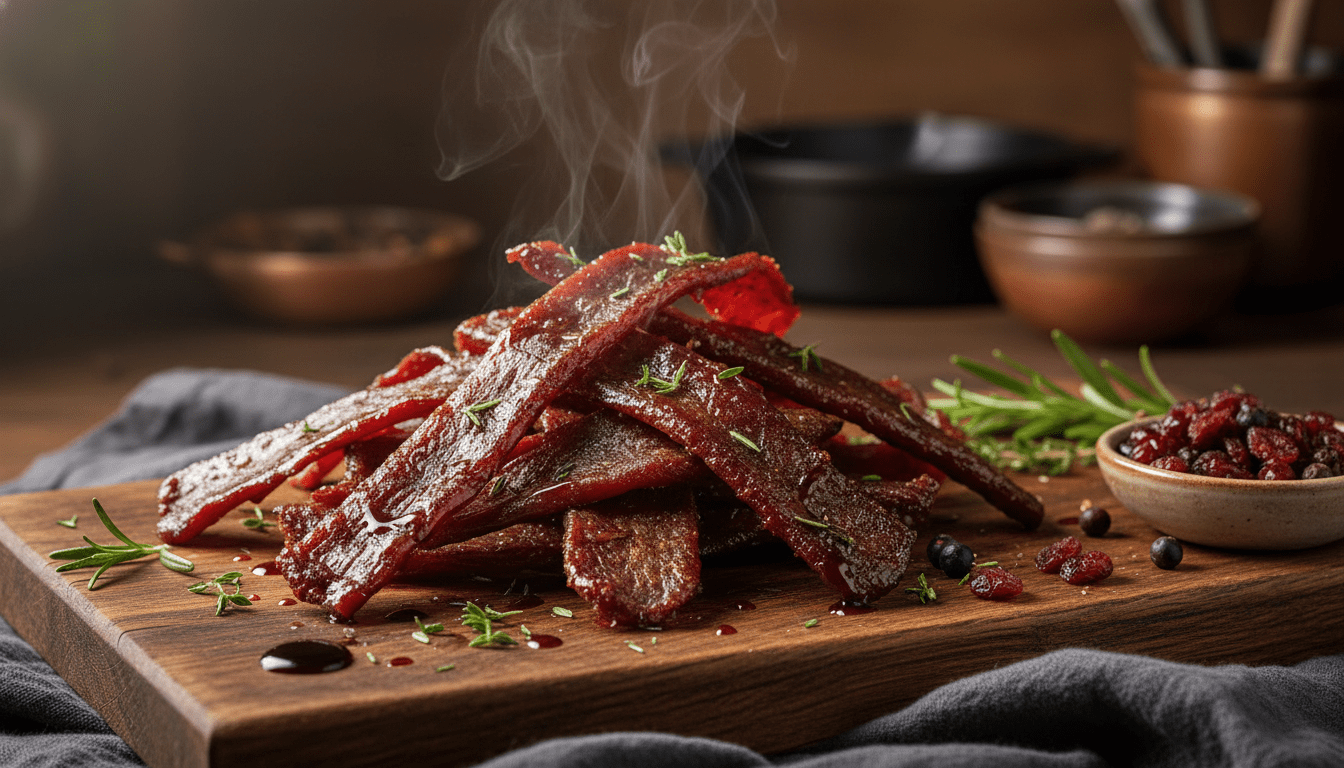
Tender Venison Jerky Recipe: How do you make soft deer jerky?
There’s nothing quite like it. That deep, earthy robustness of wild venison, lean as a pine needle, a flavor earned not bought. It’s a meat that speaks of the wild places, of crisp mornings and hard-won meals. But venison, for all its glory, can be a tricky mistress in the kitchen, prone to drying out if you don’t treat it right. Especially when it comes to jerky. Most folks end up with leathery boot straps. Not on my watch. We’re chasing soft jerky here, the kind that bends and tears, not snaps, loaded with flavor that lingers. It’s about respecting the animal, honoring the hunt, and nailing the prep to keep that precious moisture locked in, not cooked out. This method? It’s a game-changer. It ensures every strip holds onto its soul, delivering a tender bite that’ll make you forget every tough piece of jerky you’ve ever gnawed on.
Behind the Hunt: Kitchen Notes & Lessons Learned
Years back, high in the Rockies, after a hard pack out, a mule deer buck hanging cold, I remember the bite of the mountain air and the scent of pine. That night, hunkered by a low fire, I ran a blade over a haunch, thinking about how to stretch that meat, make it last. The lesson wasn’t about speed, it was about precision. Every cut mattered. The glint of steel under the gas lantern, shaving slivers against the grain. You feel the muscle fibers yielding. That’s the start of tender jerky, right there. It’s not just meat; it’s a connection to the landscape, to the effort, to the wild spirit. Treat it with that respect in the kitchen, and it’ll reward you tenfold. This isn’t just cooking; it’s preservation, an extension of the hunt.
Culinary Science & Prep: Addressing the “Gamey” Debate
Let’s cut the fat here, literally and figuratively. That so-called “gamey” flavor? It’s usually from two things: poorly bled meat, or more commonly, fat. Wild game fat has a higher melting point and a different fatty acid profile than domestic livestock. It goes rancid faster, and that’s where the off-notes come in. So, should you soak venison? Not generally for taste. A light brine can certainly help with moisture retention for some preparations, but for jerky, the real work is in the trim.
Strip every last bit of silver skin, fascia, and visible fat. Every speck. It’s tedious work, yes, but it’s critical. That silver skin? Tough as nails, won’t soften. The fat? It’ll spoil the jerky quicker and introduce those “gamey” flavors you’re trying to avoid. This isn’t just about palatability; it’s about the shelf life and the pure, clean taste of the meat itself. Once trimmed, you’re left with pure muscle fiber, ready to soak up flavor and hold onto its tenderness. This meticulous cleaning is the bedrock of soft, delicious jerky.
The Essential Gear
You can’t build a cabin with a dull hatchet. Same principle applies here. Good gear isn’t just convenience; it’s a commitment to quality and safety, an investment that honors the animal and the effort you put in.
- Sharp Butcher Knife Set: A razor-sharp boning knife for trimming, and a long slicing knife for consistent cuts. Precision matters.
[Affiliate Link: Check Price on Amazon] - Electric Meat Slicer: For uniform slices, against the grain. This is paramount for consistent drying and that prized tender chew. Hand-slicing is fine, but a slicer makes all the difference.
[Affiliate Link: Check Price on Amazon] - Reliable Food Dehydrator with Temperature Control: Consistency is key. You need steady, low heat. Forget the oven door propped open nonsense for serious jerky.
[Affiliate Link: Check Price on Amazon] - Vacuum Sealer: For long-term storage of your finished product. Protects that hard-earned jerky from air and moisture, keeping it fresh for months.
[Affiliate Link: Check Price on Amazon]
Flavor Pairings & Ingredient Selection
Venison is a blank canvas, but it needs bold strokes. It’s robust, not delicate. Think ingredients that stand up to its earthiness, inject moisture, and complement its lean nature.
- Soy Sauce/Worcestershire: The foundational umami. They penetrate deep, tenderizing and flavoring. Don’t skimp.
- Brown Sugar/Honey: A touch of sweetness balances the savory, helps with caramelization, and surprisingly, contributes to that pliable texture by attracting moisture.
- Smoked Paprika/Chipotle Powder: Smoke and heat are venison’s best friends. They echo the wild, add depth without overpowering.
- Fresh Garlic & Onion Powder: Classic aromatics, essential for building a robust flavor profile.
- Black Pepper/Crushed Red Pepper Flakes: A kick. The sharpness of pepper is a natural counterpoint to venison’s richness.
- A splash of Apple Cider Vinegar: Acid is a tenderizer and brightens the flavors. It cuts through the richness and helps the marinade penetrate.
- Liquid Smoke (optional): If you want a deeper smoke flavor without a smoker. Use sparingly; it’s potent.
These pairings aren’t random. The salts in soy and Worcestershire break down proteins. The sugars aid in tenderizing and browning. The acids provide a subtle cure and brightens. Together, they transform lean muscle into a flavorful, pliable snack.
Pro-Tips from the Wild Kitchen
You want soft jerky, not shoe leather. These are the details that matter, gleaned from years of trial and error, often in remote camps where mistakes are costly.
- Freeze for Slicing: Partially freeze your venison roast (about 1-2 hours) before slicing. This firms it up, making it much easier to get those consistent, paper-thin cuts – ideally 1/8 to 1/4 inch thick. Consistency is everything for even drying.
- Slice Against the Grain: This is paramount for tender jerky. Slicing with the grain gives you chewy, stringy jerky. Cutting across the muscle fibers shortens them, resulting in a much more tender bite. Feel the direction of the fibers; your knife needs to go perpendicular.
- Marinate with Intent: Don’t rush this. At least 12-24 hours in the fridge. Agitate the bag occasionally. The marinade isn’t just for flavor; the salts and acids work to break down proteins, contributing significantly to tenderness. Make sure every strip is thoroughly coated.
- Low and Slow Drying is the Key to Softness: Resist the urge to crank up the heat to speed things along. High heat will cook the jerky too fast, seizing up the proteins and drying it out. Aim for a dehydrator temperature between 145-160°F (63-71°C). Check for pliability, not crispness. You want it to bend, not break.
Frequently Asked Questions
What is the best way to prevent this meat from drying out?
For soft venison jerky, the battle against dryness is won on three fronts: meticulous trimming of fat and silver skin, a robust marinade with tenderizing agents (like acids and salts), and most importantly, slow and low dehydration. Slice against the grain, keep the strips consistent, and don’t rush the drying process by cranking up the heat. You’re aiming to remove just enough moisture for preservation, not all of it.
How long do you cook it for perfect medium-rare?
Hold on there, partner. We’re making jerky, not a steak. Jerky isn’t “cooked” to a medium-rare doneness. It’s dehydrated until preserved and pliable. The goal isn’t internal temperature for doneness, but rather achieving a specific moisture content and texture. If you hit a “medium-rare” temperature, you’ve barely started the drying process and it won’t be shelf-stable.
Can you substitute this wild game with a store-bought meat?
Absolutely. While the unique flavor of wild venison is irreplaceable, you can certainly use lean cuts of store-bought beef. Eye of round or flank steak are excellent choices due to their low fat content and long muscle fibers, which are ideal for slicing against the grain. Just remember to trim any visible fat with the same ruthlessness as you would wild game.
The Recipe
Prep Time: 30 minutes (plus 12-24 hours marinating)
Cook Time: 6-10 hours (dehydration)
Servings: Varies (yields approximately 1-1.5 lbs jerky per 3 lbs raw meat)
Ingredients
- 3 lbs venison roast (round, sirloin tip, or loin), meticulously trimmed of all fat and silver skin
- 1/2 cup soy sauce
- 1/2 cup Worcestershire sauce
- 1/4 cup apple cider vinegar
- 1/4 cup brown sugar (packed) or honey
- 2 tablespoons smoked paprika
- 1 tablespoon garlic powder
- 1 tablespoon onion powder
- 1 tablespoon freshly cracked black pepper
- 1 teaspoon cayenne pepper or chipotle powder (adjust to your heat preference)
- 1 teaspoon liquid smoke (optional, for deeper smoke flavor)
Instructions
- Prepare the Venison: Partially freeze the trimmed venison roast for 1-2 hours until firm but not solid. This will make slicing significantly easier.
- Slice the Meat: Using a very sharp knife or an electric meat slicer, slice the venison against the grain into uniform strips, about 1/8 to 1/4 inch thick. Consistency is critical for even drying.
- Whisk the Marinade: In a large bowl, whisk together the soy sauce, Worcestershire sauce, apple cider vinegar, brown sugar/honey, smoked paprika, garlic powder, onion powder, black pepper, cayenne/chipotle powder, and liquid smoke (if using).
- Marinate the Venison: Place the venison strips into a large, sealable plastic bag or a non-reactive container. Pour the marinade over the meat, ensuring all strips are thoroughly coated. Massage the bag to distribute the marinade.
- Refrigerate: Seal the bag, pressing out as much air as possible. Refrigerate for a minimum of 12 hours, and preferably 24 hours, turning or agitating the bag every few hours to ensure even marination.
- Prepare for Dehydration: After marinating, remove the venison strips from the bag. Pat each strip thoroughly dry with paper towels. Excess moisture on the surface will prolong drying time and can affect texture. Lay the strips on your dehydrator trays in a single layer, ensuring no pieces overlap.
- Dehydrate: Set your food dehydrator to 145-160°F (63-71°C). Dehydrate for 6-10 hours, or until the jerky is dry but still pliable.
- Check for Doneness: To test, remove a piece, let it cool to room temperature, then bend it. It should bend and crack but not break cleanly in half. It should not feel sticky or wet, nor should it be brittle. It should have a leathery, slightly chewy texture.
- Cool and Store: Once dehydrated to your desired consistency, remove the jerky from the trays and let it cool completely on a wire rack at room temperature. Store the cooled jerky in an airtight container or, for best results and extended shelf life, vacuum seal it. It will last several weeks at room temperature and months in the refrigerator or freezer.