Homemade Deer Sausage: Easy Venison Breakfast Links Recipe
There’s a primal satisfaction that settles deep in your bones when you bring down a deer, break it down, and transform that wild muscle into something truly incredible on the breakfast plate. Venison, lean and robust, carries the whisper of the forest in every bite. It’s a flavor profile unmatched by any store-bought meat—earthy, clean, and profoundly honest. But its leanness can be a challenge. That’s where homemade deer sausage, specifically these breakfast links, comes into its own. We’re not just making food; we’re coaxing out the best of the wild, blending it with rich, complementary fats and warming spices to create a link that’s juicy, deeply flavorful, and far superior to anything wrapped in plastic. This method embraces the venison’s inherent character, ensuring moisture and a balanced richness without ever letting it taste dry or “gamey.” It’s about respect for the animal and understanding your ingredients.
Behind the Hunt: Kitchen Notes & Lessons Learned
I remember one crisp November morning, breath steaming in the pre-dawn dark. A slow, steady stalk through frost-covered hardwoods. The shot, clean and quick. Hours later, back at camp, the chill bit deep, but the anticipation of venison sausage for breakfast already had a warmth spreading through me. Processing that deer, feeling the heft of the muscle, trimming with precision – it’s all part of the story, part of the respect. My hands, still smelling faintly of pine and cold steel, would soon be mixing spices into the freshly ground meat. There’s a quiet alchemy to it. The low hum of the grinder, the clatter of the stainless steel bowl, the scent of sage hitting the warm air. It’s a ritual. You learn what works. You learn what doesn’t. You learn that honoring the animal means extracting every ounce of flavor, every drop of goodness.
Culinary Science & Prep: Addressing the “Gamey” Debate
Let’s cut through the noise: there’s no need to “soak” venison. That’s an old wives’ tale, a relic from a time when field dressing was often less than meticulous. The “gamey” taste most folks complain about isn’t inherently the meat itself; it’s often poor handling in the field, or more commonly, the specific fat of the animal. Deer fat, unlike pork or beef, has a waxy consistency and a distinct, often unpleasant, flavor when rendered. It’s not suited for human consumption in most preparations, especially not sausage.
The real secret? Trim your meat. Strip every last bit of silver skin, fascia, and especially any visible fat from your venison. Get aggressive with it. This is where precision with a razor-sharp boning knife pays off. What you want is pure, lean muscle. Once trimmed, it’s about blending. Wild game fat has a different molecular structure than domestic livestock fat. It renders differently and carries different flavor compounds. For sausage, we add high-quality pork fat (pork butt or uncured bacon ends work beautifully) at a ratio of roughly 15-20% of the total weight. This provides the necessary moisture, mouthfeel, and rich flavor that venison alone can’t deliver.
Crucially, temperature control is paramount. Keep your venison and your added fat ice cold during the grinding process. Partially freeze both if you need to. Cold meat grinds cleanly; warm meat smears, leading to a pasty texture. This is your make-or-break factor for texture and preventing that dreaded dryness.
The Essential Gear
You don’t need a professional butcher shop in your kitchen, but certain tools make the process not just easier, but better. These are investments, not expenses. They protect your hard-earned meat.
-
- Heavy-Duty Meat Grinder: Forget the cheap plastic attachments. A dedicated, powerful electric grinder with stainless steel components is non-negotiable for consistent texture and durability.
[Affiliate Link: Check Price on Amazon]
- Heavy-Duty Meat Grinder: Forget the cheap plastic attachments. A dedicated, powerful electric grinder with stainless steel components is non-negotiable for consistent texture and durability.
-
- Precision Boning Knife: A high-carbon steel blade, sharp enough to shave with, makes trimming silver skin and sinew a quick, clean job, preserving precious meat.
[Affiliate Link: Check Price on Amazon]
- Precision Boning Knife: A high-carbon steel blade, sharp enough to shave with, makes trimming silver skin and sinew a quick, clean job, preserving precious meat.
-
- Digital Kitchen Scale: Accuracy matters, especially when mixing fat ratios and seasoning for sausage. This isn’t a “guesstimate” operation.
[Affiliate Link: Check Price on Amazon]
- Digital Kitchen Scale: Accuracy matters, especially when mixing fat ratios and seasoning for sausage. This isn’t a “guesstimate” operation.
-
- Instant-Read Digital Thermometer: The ultimate arbiter of doneness. No more guessing, no more dry meat. It’s how you ensure perfection every single time.
[Affiliate Link: Check Price on Amazon]
- Instant-Read Digital Thermometer: The ultimate arbiter of doneness. No more guessing, no more dry meat. It’s how you ensure perfection every single time.
Flavor Pairings & Ingredient Selection
Venison, with its robust earthiness, craves companions that can stand up to its flavor while adding balance and moisture. For breakfast links, we’re aiming for that classic sweet and savory profile, bolstered by aromatic spices.
-
- Rich Fats: As discussed, pork fat (from pork butt, or even uncured bacon ends) is your best friend. It melts beautifully, carrying flavor and lending essential succulence to the lean venison.
-
- Warming Spices: Dried sage is non-negotiable for breakfast sausage. Its herbaceous, slightly peppery notes are the foundation. Black pepper, freshly ground, adds a sharp bite. A touch of red pepper flakes provides a subtle warmth that wakes up the palate without overpowering.
-
- Sweet Counterpoint: A hint of brown sugar or pure maple syrup caramelizes beautifully on the pan, creating a delicious crust and balancing the savory and earthy notes of the meat and spices. It’s the secret to that classic breakfast sausage appeal.
-
- Salt: Kosher salt, measured precisely, enhances every other flavor. It’s not just about making things salty; it’s about making them taste more like themselves.
Pro-Tips from the Wild Kitchen
These aren’t suggestions; they’re tenets of good cooking, especially with wild game.
-
- Keep it Cold, Always: From trimming to grinding to mixing, keep your meat and fat as close to freezing as possible. Chill your grinder components. This ensures a clean grind and prevents fat smearing.
-
- Test Your Seasoning: Before forming all your links, fry a small, thin patty of the mixed sausage meat. Taste it. Adjust salt, sugar, or spices as needed. It’s far easier to tweak now than after you’ve cooked a whole batch.
-
- Don’t Overmix: Once your spices are in, mix just enough to distribute everything evenly. Overmixing develops protein strands, leading to a tough, bouncy sausage rather than a tender, crumbly one.
-
- A Good Sear, Then Gentle Heat: For crispy links, start them in a slightly oiled cast-iron skillet over medium-high heat to get a good crust. Then, drop the heat to medium-low, cover, and let them cook through gently. This prevents the outside from burning while the inside remains raw.
Frequently Asked Questions
What is the best way to prevent this meat from drying out?
The primary defense against dry venison sausage is adding sufficient pork fat (15-20% ratio) and not overcooking it. Venison is incredibly lean, so that added fat is critical for moisture. Beyond that, use an instant-read thermometer to pull the sausage from the heat as soon as it reaches the target internal temperature (160°F for ground meat containing pork). Low and slow cooking after an initial sear helps, as does resting the cooked links for a few minutes before serving.
How long do you cook it for perfect medium-rare?
For any ground meat containing pork, including venison breakfast sausage with added pork fat, medium-rare is not recommended for food safety. Ground meat needs to reach an internal temperature of 160°F (71°C) to be safe for consumption. This will result in a fully cooked, but still juicy and tender, sausage if you follow the other steps (proper fat ratio, not overmixing, not overcooking past 160°F).
Can you substitute this wild game with a store-bought meat?
You can, but it won’t be the same. The unique, lean, earthy flavor of venison is what makes this recipe special. If you absolutely must substitute, a lean ground beef mixed with a higher percentage of pork fat, or even ground turkey with added pork fat, would be your closest bet for texture and moisture. However, you’ll miss the distinct wild game character. Consider it a different, albeit still delicious, breakfast sausage.
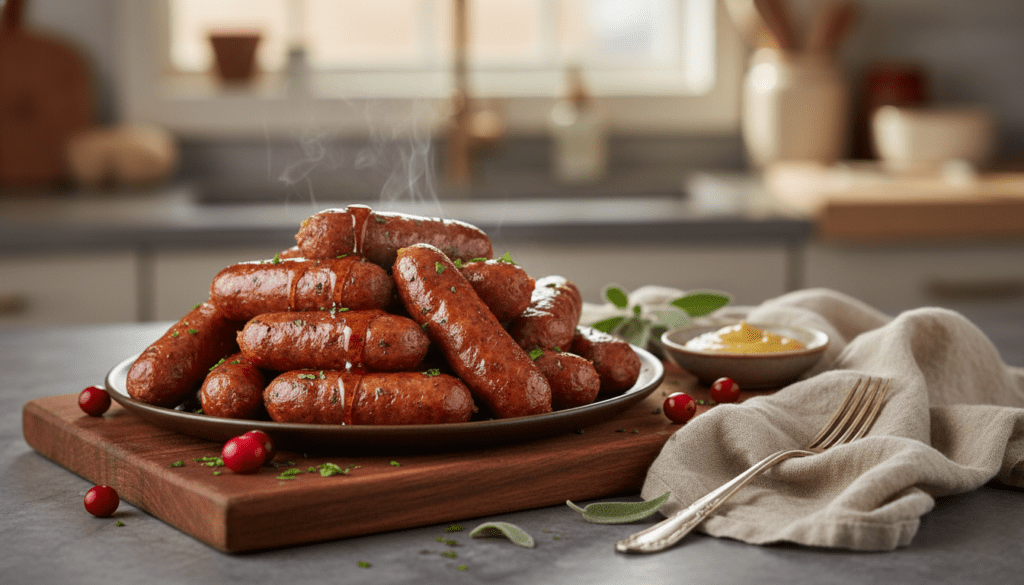
The Recipe
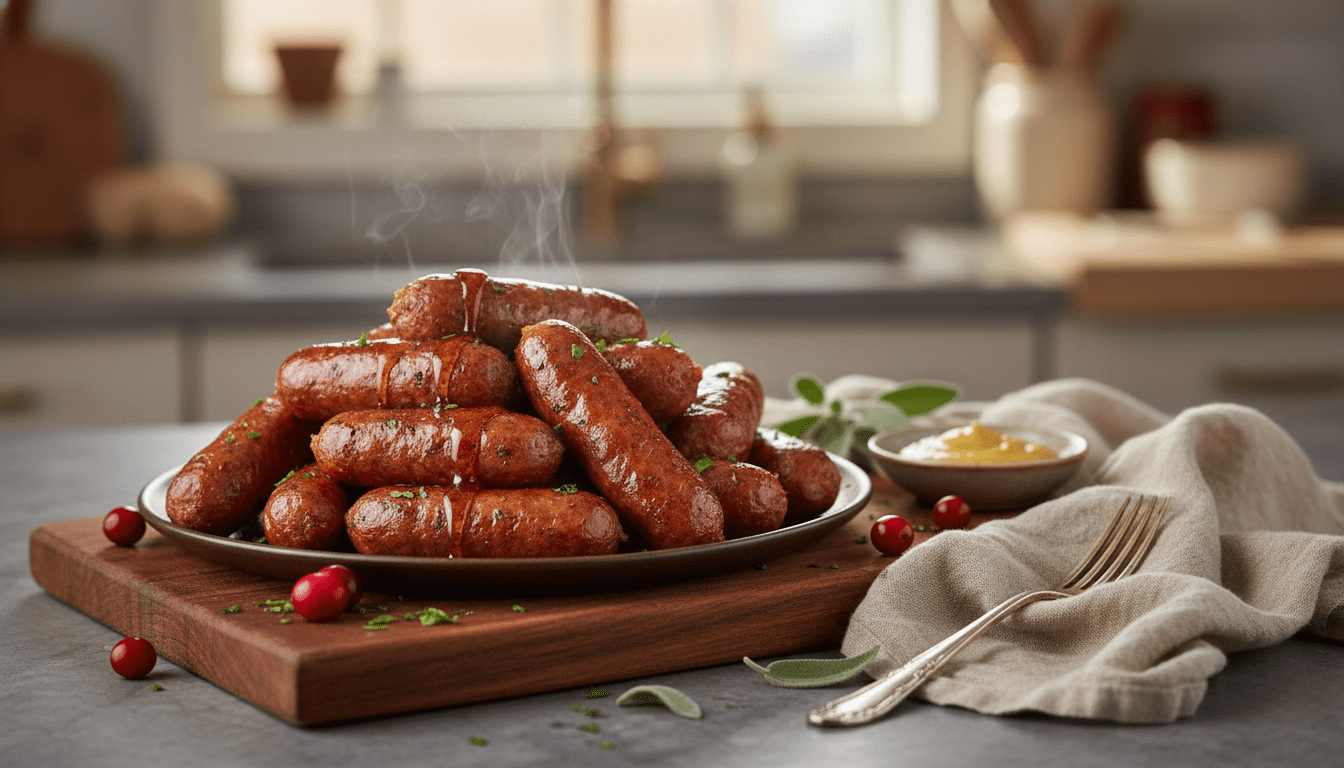
This recipe yields a batch of deeply flavorful, juicy venison breakfast links that will make you look forward to every sunrise.
Prep Time: 30 minutes (plus chilling time)
Cook Time: 10-15 minutes
Servings: Approximately 24-30 links (about 2.5 lbs of sausage)
Ingredients
-
- 2 lbs lean venison trimmings (silver skin and fat removed, cut into 1-inch cubes)
-
- 8 oz boneless pork butt or high-quality uncured bacon ends (cut into 1-inch cubes, well-chilled)
-
- 2 tbsp kosher salt
-
- 1 tbsp freshly ground black pepper
-
- 1 tbsp dried sage
-
- 2 tsp brown sugar (packed) or maple sugar
-
- 1 tsp smoked paprika (optional, for depth)
-
- ½ tsp red pepper flakes (adjust to your spice preference)
-
- ¼ cup ice water
Instructions
-
- Chill Your Ingredients & Gear: Place the cubed venison and pork fat in separate bowls and put them in the freezer for 30-45 minutes until very cold but not frozen solid. While they chill, place your meat grinder components (auger, blade, grinding plate) in the freezer too. This is crucial for a clean grind.
-
- Grind the Meat: Assemble your chilled grinder with the coarse grinding plate. Pass the venison and pork fat through the grinder together. Mix lightly to combine, then pass the mixture through the grinder a second time using a medium grinding plate for a finer, more uniform texture.
-
- Season the Sausage: Transfer the ground meat to a large, cold mixing bowl. Add the kosher salt, black pepper, dried sage, brown sugar (or maple sugar), smoked paprika (if using), and red pepper flakes. Pour in the ice water.
-
- Mix Gently: Using your hands (wear gloves if preferred), gently mix the spices into the meat until just combined. Be careful not to overmix, as this can make the sausage tough. The mixture should feel well-integrated but not sticky or pasty.
-
- Test the Seasoning: Pinch off about a tablespoon of the seasoned sausage mixture and form it into a small, thin patty. Fry it in a lightly oiled skillet over medium heat until cooked through (about 2-3 minutes per side). Taste and adjust the seasoning in the main batch as needed—add more salt, pepper, or other spices if desired.
-
- Form the Links/Patties: For links, roll small portions of the sausage mixture between your palms into roughly 1-inch thick, 3-4 inch long cylinders. For patties, flatten into disks about ¼ to ½ inch thick.
-
- Cook the Sausage: Heat a heavy cast-iron skillet or non-stick pan over medium heat. Add a tiny amount of high-heat oil (like grapeseed or avocado oil). Place the venison links or patties in the hot pan, ensuring not to overcrowd it.
-
- Sear and Finish: Cook for 3-5 minutes per side for links, or 4-6 minutes total for patties, until golden brown and a rich crust forms. Reduce the heat slightly, cover the pan, and continue to cook, turning occasionally, until an instant-read thermometer inserted into the thickest part reads 160°F (71°C).
-
- Serve Hot: Remove the cooked sausage from the pan and let rest for a minute or two before serving. They pair perfectly with eggs, pancakes, or a stack of good grits. The remaining uncooked sausage can be tightly wrapped and frozen for later use.