Slow cooker venison roast: How to get it fall-apart tender
There’s nothing quite like a venison roast. It’s the taste of the wild, lean and honest, a deep, earthy flavor that speaks of frost-nipped mornings and silent woods. But let’s be straight: cooking venison isn’t like tossing a slab of grocery-store beef into a pan. It’s a different animal, literally. Its leanness, its lack of marbled fat, demands respect and a specific approach if you want it to sing on the plate instead of chew like old boot leather. Forget high heat and quick cooks for most roasts. For that fall-apart tender perfection? You need patience. You need low heat. You need the slow cooker. This method, a true workhorse of the backcountry kitchen, is your best friend. It coaxes moisture into every fiber, breaks down tough connective tissue, and transforms a lean, often challenging cut into a dish that truly honors the animal. It’s not about hiding the venison; it’s about showcasing its best self.
Behind the Hunt: Kitchen Notes & Lessons Learned
Cold morning. The breath, a plume in the crisp air. Shot was true. Clean kill. That’s the first step in any good meal. The real work begins after, field dressing quickly, cleanly, respecting the meat. The weight of that hindquarter on my shoulder, the chill seeping into my jacket – it’s a direct connection to what ends up on the plate. Every ounce of effort in the field, every careful cut, it all translates to the kitchen. I remember one season, pushed hard, a long pack out. Got back to camp, tired to the bone. That venison roast, slow cooking all day, the smell filling the cabin. It wasn’t just food; it was fuel, it was reward, it was a testament. You treat that animal right from the moment it hits the ground, and it’ll treat you right on the table. This slow cooker method? It’s part of that respect. It’s a way to ensure every tough fiber, every sinew, gets transformed into something truly tender, something you can pull apart with a fork. It’s honoring the animal, from shot to plate.
Culinary Science & Prep: Addressing the “Gamey” Debate
Alright, let’s cut through the myths. The “gamey” taste? Most of the time, it’s not the meat itself, but poor handling, improper trim, or the animal’s diet and age. Should you soak it? Generally, no. Not for good quality, well-handled venison. Soaking in milk or saltwater often just pulls out flavor and nutrients, leaving you with bland meat. If you’ve got an older animal, or one that’s been stressed, a quick soak in buttermilk can help tenderize and neutralize, but it’s rarely necessary for a well-prepared cut.
The real secret lies in the trim. Silver skin, fascia, and any visible fat. Get rid of it. Ruthlessly. Wild game fat has a much higher melting point and a different flavor profile than domestic animal fat. It’s what can give venison that waxy, sometimes off-putting taste. Trim it all. Every bit. What you’re left with is pure muscle, pure flavor.
Now, the science of the slow cook. Venison, like other wild game, is lean, packed with dense muscle fibers and connective tissue. High heat cooks it fast, seizing those fibers, making it tough. Low and slow heat, however, gives enzymes time to break down those tough tissues. It melts collagen into gelatin, infusing moisture and creating that luscious, fall-apart texture. Strict temperature control is your make-or-break factor here. You’re not trying to cook it quickly; you’re trying to braise it into submission, ensuring every fiber yields.
The Essential Gear
You can’t do battle with tough cuts or conquer the backcountry kitchen without the right tools. These aren’t just gadgets; they’re investments that ensure your hard-earned meat gets the respect it deserves.
- A Reliable Slow Cooker (6-7 Quart): Don’t skimp here. A sturdy, even-heating slow cooker is the heart of this operation. It maintains consistent low temperatures, critical for tenderizing venison. A programmable model is a bonus, letting you set it and forget it.
[Affiliate Link: Check Price on Amazon] - High-Carbon Boning Knife: For meticulous trimming of silver skin and fat. A sharp, precise blade makes all the difference in prep, ensuring you get rid of every bit of that gamey potential.
[Affiliate Link: Check Price on Amazon] - Heavy-Bottomed Skillet or Dutch Oven: Essential for searing the roast before it hits the slow cooker. That golden-brown crust adds incredible depth of flavor that a slow cooker alone can’t achieve. Cast iron is king here for its even heat.
[Affiliate Link: Check Price on Amazon] - Precision Digital Meat Thermometer: While the slow cooker’s job is to go past traditional “doneness” for fall-apart tenderness, a good thermometer is still vital for checking the internal temperature of your liquid and ensuring your slow cooker is holding at a safe, consistent braising temp, especially if you’re experimenting.
[Affiliate Link: Check Price on Amazon]
Flavor Pairings & Ingredient Selection
Venison, with its robust, earthy character, loves strong, classic partners. You’re looking for ingredients that complement its lean nature by adding moisture, acidity, or a balancing richness, not masking it.
- Aromatics: Onions, carrots, celery (the “holy trinity” for a reason) form the foundational flavor base. Garlic, obviously.
- Acids & Liquids: Red wine (a dry Cabernet or Merlot), beef or venison stock, and a touch of balsamic vinegar or apple cider vinegar. The acidity helps to further break down the meat fibers and adds a crucial brightness that cuts through the richness, preventing the dish from becoming one-note. Don’t skimp on the liquid; it’s what creates that moist, braised environment.
- Herbs & Spices: Juniper berries are a natural ally, their piney, slightly peppery notes mirroring the wild flavors of the meat. Bay leaves, fresh rosemary, and thyme bring classic, woodsy aromatics. A pinch of dried porcini powder can amplify the earthiness.
- Fats: Since venison is so lean, a little added fat can do wonders. A few strips of thick-cut bacon, rendered down to start your sear, or a tablespoon of good quality tallow, provides a needed richness and helps carry other flavors.
Pro-Tips from the Wild Kitchen
Getting a good wild game meal on the table isn’t just about the recipe; it’s about the instincts, the little tricks you pick up over years of cooking in all sorts of conditions.
- Sear Hard, Sear First: This isn’t optional. Before your roast goes into the slow cooker, get a good, dark crust on it in a screaming hot skillet. This Maillard reaction creates incredible depth of flavor, locking in savory notes that low, moist heat can’t develop alone. Don’t crowd the pan.
- Deglaze with Authority: After searing the venison, pour off any excess fat from your skillet (unless you’re leaving bacon fat for flavor), then add your red wine or stock to the hot pan. Scrape up every brown bit from the bottom. That’s pure flavor, friend. Don’t leave it behind. That liquid goes into the slow cooker.
- Resist the Peek: Every time you lift that slow cooker lid, you let out precious heat and moisture, extending the cooking time. Trust the process. Set it, walk away. Come back when it’s done.
- The Rest is Best: Once that venison is fall-apart tender, take it out of the slow cooker and let it rest on a cutting board, covered loosely, for 15-20 minutes. This allows the juices to redistribute throughout the meat, resulting in a more succulent, flavorful end product. Pull it, shred it, or slice it thick after that rest.
Frequently Asked Questions
What is the best way to prevent this meat from drying out?
Simple. Low and slow cooking in ample liquid. The slow cooker method, by design, bathes the venison in moisture for hours, breaking down connective tissues and infusing the meat. Searing first also helps create a flavorful crust that contributes to moisture retention, but the real key is a long, moist braise. Don’t overcook by length of time – cook until it’s fork-tender, not by a stopwatch if your roast is larger or smaller than expected.
How long do you cook it for perfect medium-rare?
You don’t. A slow cooker is for braising, for transforming tough cuts into fall-apart tender deliciousness. Medium-rare is a different animal altogether, requiring high heat and quick cooking for cuts like loin or backstrap. If you want a medium-rare roast, you’re looking for a reverse sear in an oven or a high-heat sear for thinner cuts, not a slow cooker. This recipe is aiming for tender, succulent, fully cooked meat that shreds effortlessly.
Can you substitute this wild game with a store-bought meat?
You can, but it won’t be the same. Venison has a unique, lean, earthy flavor that store-bought beef or pork can’t replicate. If you must substitute, a beef chuck roast or a pork shoulder would be the closest in terms of texture once slow-cooked, as they also benefit from low-and-slow braising to become tender. However, you’ll miss that distinct taste of the wild. Embrace the venison for what it is.
The Recipe
Prep Time: 25 minutes
Cook Time: 6-8 hours (low) or 3-4 hours (high)
Servings: 6-8
Ingredients
- 3-4 lbs venison roast (shoulder, hindquarter, or neck roast), trimmed of all silver skin and fat
- 2 tbsp olive oil or rendered bacon fat
- 1 large yellow onion, chopped
- 3 carrots, peeled and roughly chopped
- 2 celery stalks, roughly chopped
- 4 cloves garlic, minced
- 1 cup dry red wine (Cabernet Sauvignon or Merlot)
- 3 cups beef or venison stock
- 1 tbsp balsamic vinegar (optional, for extra depth)
- 2 sprigs fresh rosemary
- 4 sprigs fresh thyme
- 2 bay leaves
- 1 tsp juniper berries, lightly crushed (optional, but highly recommended)
- 1 tsp salt, or to taste
- 1/2 tsp black pepper, freshly ground, or to taste
- 2 tbsp cornstarch mixed with 2 tbsp cold water (for thickening gravy, optional)
- Fresh parsley, chopped (for garnish)
Instructions
- Prep the Venison: Pat the venison roast completely dry with paper towels. Season generously all over with salt and freshly ground black pepper. Ensure all silver skin and visible fat have been meticulously removed.
- Sear the Roast: Heat the olive oil or rendered bacon fat in a heavy-bottomed skillet or Dutch oven over medium-high heat until shimmering. Carefully place the venison roast in the hot pan and sear on all sides until deep golden brown, about 3-4 minutes per side. Remove the roast from the pan and set aside.
- Sauté Aromatics: Reduce the heat to medium. Add the chopped onion, carrots, and celery to the same pan. Sauté for 5-7 minutes, scraping up any browned bits from the bottom of the pan, until softened. Add the minced garlic and cook for another minute until fragrant.
- Deglaze: Pour in the red wine, scraping the bottom of the pan vigorously to release all the flavorful fond. Let the wine simmer for 2-3 minutes, reducing slightly. Stir in the balsamic vinegar if using.
- Assemble the Slow Cooker: Transfer the sautéed vegetables and deglazing liquid to the slow cooker. Place the seared venison roast on top of the vegetables.
- Add Liquids & Herbs: Pour in the beef or venison stock. Add the fresh rosemary, thyme, bay leaves, and crushed juniper berries. The liquid should come about two-thirds of the way up the roast.
- Cook Low and Slow: Cover the slow cooker and cook on LOW for 6-8 hours or on HIGH for 3-4 hours, or until the venison is fall-apart tender and can be easily shredded with a fork. Cooking time will vary based on your slow cooker and the size/cut of your roast.
- Rest the Meat: Carefully remove the venison roast from the slow cooker and transfer it to a clean cutting board. Tent loosely with foil and let it rest for at least 15-20 minutes.
- Make the Gravy (Optional): While the meat rests, skim any excess fat from the cooking liquid in the slow cooker. In a small bowl, whisk together the cornstarch and cold water until smooth. Stir this slurry into the hot liquid in the slow cooker. Cover and cook on HIGH for another 15-20 minutes, or until the gravy has thickened to your desired consistency. Taste and adjust seasonings as needed.
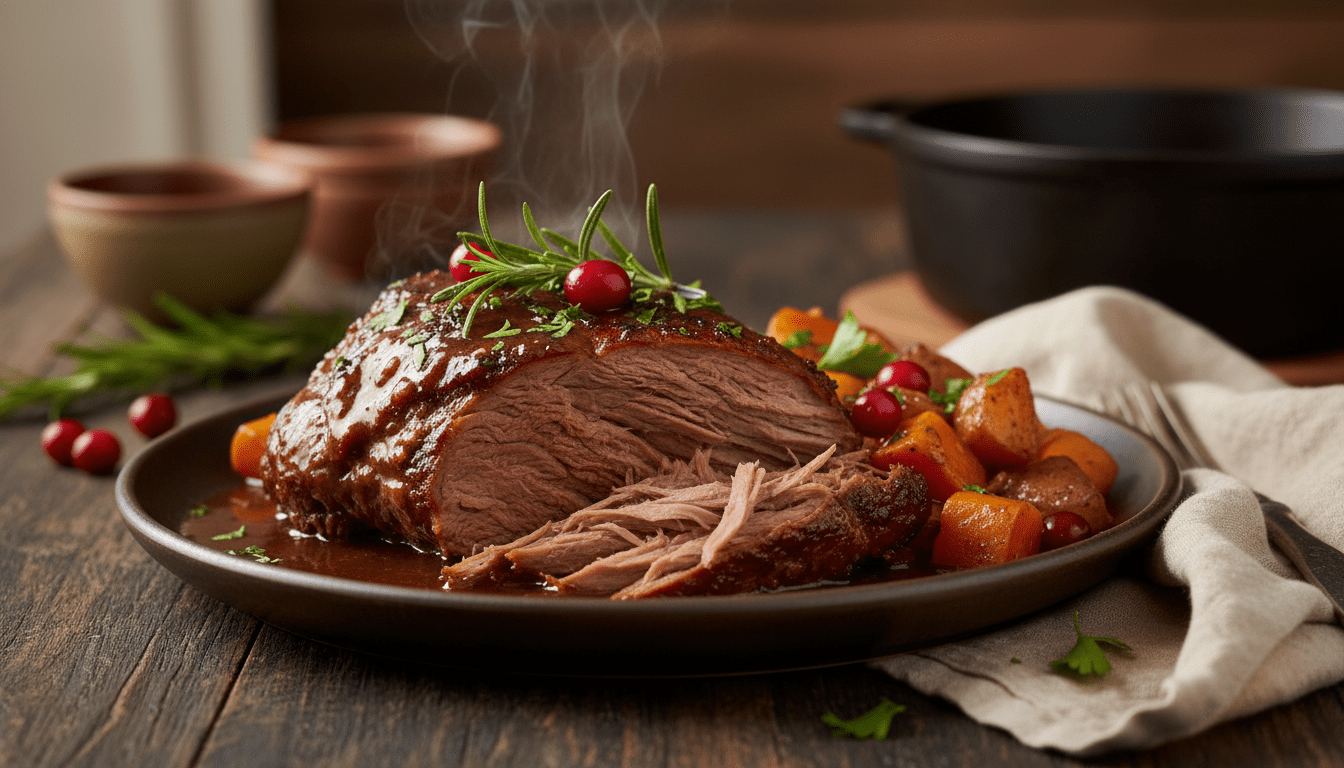
- Serve: Shred the rested venison with two forks or slice thickly. Serve the tender venison over mashed potatoes, polenta, or wild rice, generously drizzled with the rich gravy. Garnish with fresh chopped parsley.